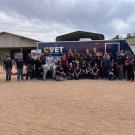
The California Veterinary Emergency Team is seeking a creative, motivated UC Davis undergraduate to help bring our mission to life through engaging social media content. Under the supervision of the Communications Lead, create Instagram and Facebook Reels, capture photos and video of the team in action, and tell compelling stories about disaster preparedness, emergency response, and animal care. Position & Application Info
When a disaster strikes, California Veterinary Emergency Team (CVET) responders must be ready to mobilize quickly, work together seamlessly, and provide veterinary support in challenging and rapidly evolving conditions.
That degree of readiness doesn't happen by chance. In addition to CVET's year-round trainings, educational webinars, and preparedness initiatives, annual full-scale exercises provide responders with the opportunity to put their training into practice before a real emergency occurs.
Firefighters are trained to respond to just about anything but emergencies involving animals bring a different kind of challenge. That's where CVET comes in. CVET is working alongside the UC Davis Fire Department to help prepare responders for those moments through a new pilot training program.
At the California Veterinary Emergency Team (CVET), preparing for disasters means investing not only in training and readiness today, but also in the next generation of veterinarians who will lead responses in the future. That’s why we launched the CVET Undergraduate Internship Program and why we’re thrilled to celebrate our inaugural intern, Olivia “Liv” Morgans, on her recent acceptance to the UC Davis Weill School of Veterinary Medicine.
Members of the California Veterinary Emergency Team (CVET) Management Team recently joined animal response leaders from across the state for the sixth annual Cal CARTs Leadership and Training Summit, held near Fresno, California.
by Ashley Patterson, CVET Associate Director of Operations
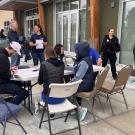
CVET was requested by Contra Costa Animal Services to facilitate at tabletop exercise for the members of the Contra Costa County Animal Response Team (CART). This half day exercise was divided into two sections. First, CART members were provided a brief orientation to the emergency response trailer and given the task of setting up a small animal shelter. CART members were placed into teams under the Incident Command System (ICS) organizational structure and got to work! The participants learned about what resources they had and some recommended best practices for intake and shelter set up.
Last week the CVET team met with members of the California Governor’s Office of Emergency Services (Cal OES) Incident Management Assistance Team (IMAT). Cal OES IMAT is a deployable team of emergency management professionals that assists local governments and coordinates the State’s response during major disasters. Like CVET, IMAT can be requested by local jurisdictions when resources are exhausted or overwhelmed.
This past weekend, members of the CVET management team had the privilege of participating in a large-scale, multi-regional disaster simulation exercise hosted by Sonoma County. The scenario - a simulated earthquake followed by a fire - provided a realistic and challenging backdrop for emergency teams to test their capabilities, coordination, and communication.
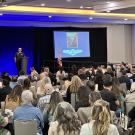
The California Veterinary Emergency Team (CVET) recently participated in the California Emergency Services Association (CESA) Annual Conference, marking our third year in a row exhibiting to conference attendees. This event provides an invaluable platform for CVET to engage with emergency managers, local jurisdiction representatives, and key stakeholders dedicated to safeguarding both human and animal lives during emergencies.
The California Veterinary Emergency Team (CVET) recently wrapped up an inspiring and productive multi-county trip through Southern California, where we had the privilege of collaborating with an incredible group of partners committed to advancing animal disaster response. From San Bernardino County to Pomona to Ventura County, this journey was all about building relationships, sharing knowledge, and expanding the region’s capacity to care for animals in times of crisis.